


The food industry faces constant pressure to deliver fresh products, maintain strict safety standards, reduce waste, and meet growing consumer demand. Managing these challenges manually has become increasingly difficult, especially as supply chains become more complex.
That’s where foodtech automation supply chain solutions make a difference. By combining automation technologies with modern food supply chain management, businesses can streamline production, improve traceability, optimize inventory, and respond more quickly to market changes.
Automation is no longer limited to large multinational manufacturers. Small and medium-sized food businesses are also adopting smart technologies to improve efficiency while keeping costs under control.
This guide explains how foodtech automation works throughout the supply chain, where it delivers the greatest value, and what businesses should consider before investing.
What Is FoodTech Automation Supply Chain?
A foodtech automation supply chain combines digital technologies, automated equipment, software platforms, and connected devices to manage the movement of food from raw ingredients to the customer’s table.
Automation can support nearly every stage of the process, including:
- Ingredient sourcing
- Manufacturing
- Packaging
- Warehouse management
- Transportation
- Retail distribution
- Quality control
- Food safety monitoring
Instead of relying solely on manual tracking and paperwork, automated systems collect data in real time, helping businesses make faster and more informed decisions.
Why FoodTech Automation Supply Chain Matters
Food products are highly sensitive to time, temperature, and handling conditions. Even small delays can affect quality or lead to waste.
Automation helps companies respond more effectively by providing better visibility across operations.
Some of today’s biggest industry challenges include:
- Rising labor costs
- Labor shortages
- Supply chain disruptions
- Strict food safety regulations
- Increasing customer expectations
- Sustainability goals
- Demand forecasting uncertainty
Automated systems don’t eliminate these problems completely, but they make them easier to manage.
How Automation Works Across the Food Supply Chain
Raw Material Procurement
Automation begins before production starts.
Suppliers can automatically share:
- Inventory levels
- Delivery schedules
- Purchase orders
- Quality certifications
Digital procurement platforms reduce paperwork while improving communication between suppliers and manufacturers.
Production and Processing
Modern food factories increasingly rely on automation to improve consistency.
Examples include:
- Robotic ingredient handling
- Automated mixing systems
- Portion control
- Baking automation
- Meat processing equipment
- Beverage filling lines
Sensors monitor equipment continuously, helping operators identify potential issues before they interrupt production.
Quality Control
Inspection used to depend heavily on manual checks.
Today, automated quality systems can detect:
- Incorrect package weights
- Product defects
- Color variations
- Seal failures
- Foreign contaminants
- Labeling errors
Machine vision systems perform these inspections much faster than manual methods while maintaining consistent standards.
Packaging Automation
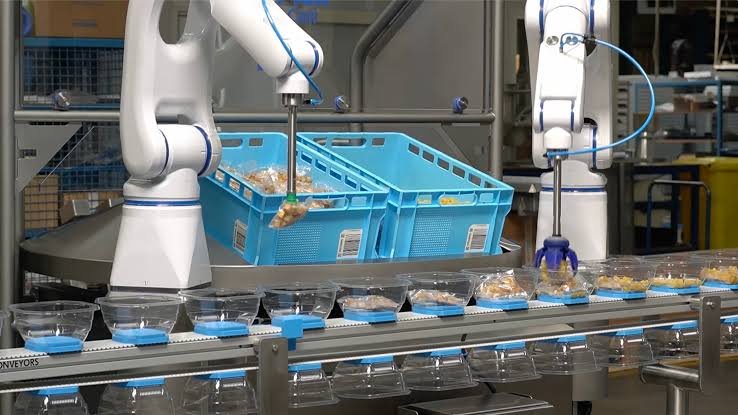
Packaging often represents one of the most automated parts of food manufacturing.
Automated systems can:
- Fill containers
- Seal packaging
- Print labels
- Apply barcodes
- Verify expiration dates
- Sort finished products
This improves production speed while reducing packaging errors.
Warehouse Management
Warehouse automation has expanded rapidly in recent years.
Many facilities now use:
- Automated storage systems
- Barcode scanners
- RFID tracking
- Conveyor systems
- Robotic pallet movers
- Smart inventory software
These technologies reduce picking errors and improve inventory accuracy.
Cold Chain Monitoring
Temperature control is essential for many food products.
Connected sensors continuously monitor:
- Refrigerated trucks
- Storage warehouses
- Distribution centers
- Retail coolers
If temperatures move outside safe ranges, automated alerts allow staff to respond before products spoil.
Transportation and Delivery
Logistics software now automates many transportation decisions.
Systems can optimize:
- Delivery routes
- Fuel efficiency
- Driver scheduling
- Vehicle utilization
- Delivery windows
Real-time GPS tracking also improves shipment visibility for both suppliers and customers.
Key Benefits of FoodTech Automation Supply Chain
Improved Food Safety
Automated monitoring reduces the chance of missed inspections and improves compliance with food safety standards.
If contamination occurs, digital traceability systems help identify affected products much faster than paper-based records.
Better Inventory Management
Automation provides accurate inventory counts across warehouses and production facilities.
This helps businesses:
- Reduce overstocking
- Prevent shortages
- Improve purchasing decisions
- Lower storage costs
Reduced Food Waste
Food waste often results from poor forecasting or inventory errors.
Automation improves demand planning by combining:
- Historical sales
- Seasonal trends
- Customer demand
- Production capacity
More accurate planning means fewer products expire before reaching customers.
Higher Productivity
Automated equipment handles repetitive tasks consistently, allowing employees to focus on supervision, maintenance, quality improvement, and customer service.
Rather than replacing every worker, automation often changes how teams work.
Improved Traceability
Consumers increasingly want to know where food comes from.
Automation makes it easier to track products through every stage of production, supporting faster recalls and greater transparency.
More Reliable Forecasting
Artificial intelligence and predictive analytics can estimate future demand using large amounts of operational data.
Although forecasts are never perfect, automated systems generally produce more accurate planning than spreadsheets alone.
Technologies Driving Food Supply Chain Automation
Several technologies work together rather than operating independently.
Artificial Intelligence (AI)
AI analyzes production, sales, and logistics data to improve planning and identify patterns.
Internet of Things (IoT)
Connected sensors monitor equipment, storage conditions, and transportation environments in real time.
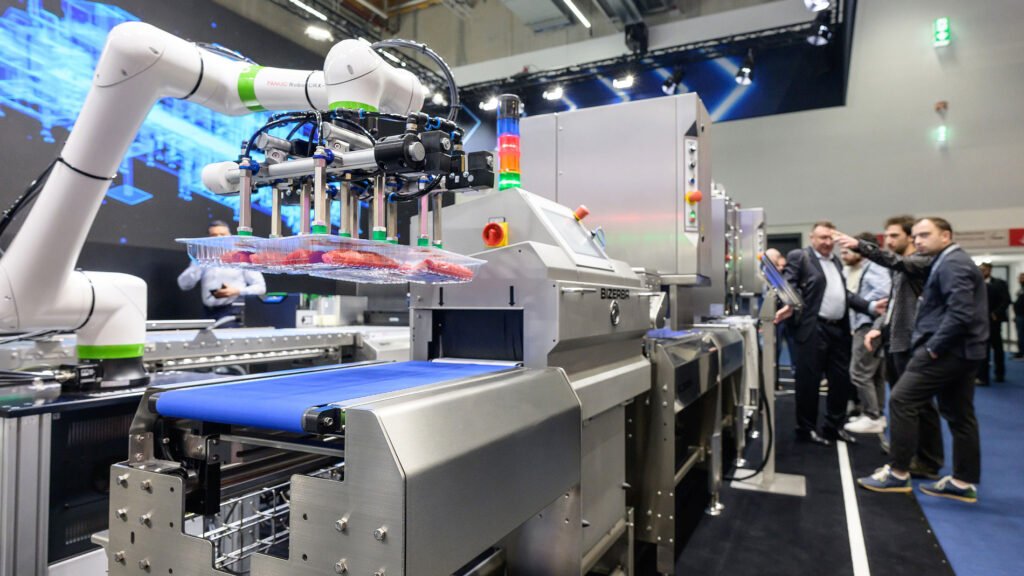
Robotics
Industrial robots assist with:
- Palletizing
- Packaging
- Sorting
- Picking
- Material handling
RFID and Barcode Systems
These technologies improve inventory accuracy while reducing manual scanning errors.
Warehouse Management Systems (WMS)
WMS software coordinates inventory movement throughout warehouses, improving storage efficiency and order fulfillment.
Enterprise Resource Planning (ERP)
ERP platforms connect purchasing, finance, production, inventory, and logistics into one integrated system.
Step-by-Step Guide to Implementing FoodTech Automation Supply Chain
1. Identify Operational Bottlenecks
Start by reviewing existing workflows.
Look for repetitive tasks, delays, inventory issues, or quality problems that automation could address.
2. Define Clear Business Goals
Automation projects should solve specific problems.
Examples include:
- Faster production
- Lower waste
- Better inventory accuracy
- Improved traceability
- Reduced labor shortages
3. Choose Scalable Solutions
Avoid purchasing more technology than you currently need.
Select systems that can expand as your business grows.
4. Integrate Existing Systems
Automation works best when production, inventory, purchasing, and logistics share information.
Poor integration often creates new inefficiencies.
5. Train Employees
Technology alone doesn’t improve operations.
Employees need practical training to operate equipment, interpret data, and troubleshoot problems.
6. Monitor Performance
Track measurable outcomes such as:
- Production output
- Downtime
- Waste levels
- Order accuracy
- Delivery performance
- Inventory turnover
Continuous improvement should continue after implementation.
Common Mistakes
Many automation projects fall short because companies focus on technology rather than operations.
Common mistakes include:
- Automating inefficient processes without redesigning them
- Ignoring employee training
- Buying expensive systems with unnecessary features
- Underestimating maintenance requirements
- Poor software integration
- Neglecting cybersecurity for connected devices
- Failing to establish measurable performance goals
Expert Tips
- Begin with one department before expanding automation across the business.
- Standardize workflows before introducing new technology.
- Select vendors that provide ongoing technical support.
- Build automation around business objectives instead of chasing trends.
- Review system performance regularly and adjust processes as conditions change.
- Keep data quality high, since automated decisions are only as reliable as the information they receive.
Challenges to Consider
Automation offers many advantages, but it also requires thoughtful planning.
Businesses should account for:
- Initial investment costs
- System integration complexity
- Employee training
- Software updates
- Equipment maintenance
- Cybersecurity risks
- Regulatory compliance
Smaller businesses often benefit from implementing automation gradually rather than attempting a full transformation at once.
The Future of FoodTech Automation Supply Chain
Automation is becoming more connected, data-driven, and intelligent.
Emerging developments include:
- AI-powered demand forecasting
- Autonomous warehouse robots
- Digital twins for production planning
- Blockchain-supported traceability
- Predictive maintenance
- Smart refrigeration monitoring
- Collaborative robots working alongside employees
Rather than replacing human expertise, these technologies increasingly support faster, more informed decision-making.
Final Thoughts
A modern foodtech automation supply chain helps food businesses improve efficiency, strengthen food safety, reduce waste, and gain better visibility across every stage of operations. The greatest benefits come from aligning technology with clear business goals rather than adopting automation for its own sake.
Companies that take a phased approach—starting with well-defined challenges, training employees, and measuring results—are more likely to see lasting improvements. As supply chains continue to evolve, automation will remain an important tool for building resilient, responsive, and customer-focused food operations.
Frequently Asked Questions
1. What is a foodtech automation supply chain?
A foodtech automation supply chain uses digital technologies, software, sensors, and automated equipment to improve food production, inventory, logistics, and distribution.
2. How does automation improve food safety?
Automation enables continuous monitoring, digital recordkeeping, and faster product traceability, helping businesses identify and respond to potential food safety issues more efficiently.
3. Is foodtech automation only suitable for large companies?
No. Many small and medium-sized food businesses adopt automation gradually, starting with inventory management, packaging, or warehouse operations before expanding further.
4. What technologies are commonly used in food supply chain automation?
Common technologies include AI, IoT sensors, robotics, RFID, barcode systems, warehouse management software, and ERP platforms.
5. Does automation eliminate jobs in the food industry?
Not necessarily. Automation often shifts employees toward higher-value tasks such as quality assurance, equipment maintenance, process improvement, and operational oversight.
6. What are the biggest challenges when implementing automation?
The main challenges include upfront investment, integrating new systems with existing processes, employee training, maintenance, and cybersecurity planning.
7. How does foodtech automation supply chain reduce food waste?
By improving inventory accuracy, forecasting demand more effectively, monitoring storage conditions, and optimizing production schedules, automation helps reduce spoilage and unnecessary waste.














No Comments