



If you have ever seen a small bowl of salt sitting on a dining table, you may have wondered what is a salt cellar. A salt cellar is a small container designed to hold salt, traditionally placed on a dining table or used while preparing food. Unlike a typical salt shaker, it usually has an open top or a simple lid, allowing diners or cooks to take a pinch of salt directly.
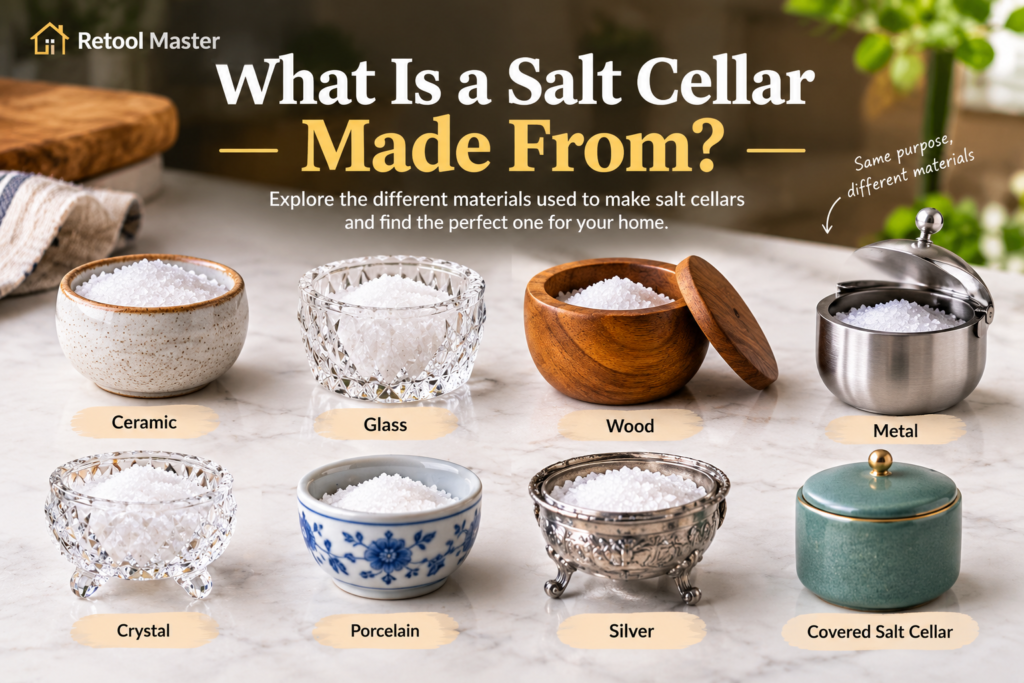
Salt cellars are both practical and decorative. They have been used for centuries and can be made from materials such as ceramic, glass, porcelain, silver, wood, or crystal.
In this guide, you’ll learn what a salt cellar is, how it works, where it came from, how it differs from a salt shaker, and how to choose and use one today.
What Is a Salt Cellar?
A salt cellar is a small container used to store and serve salt. Its design makes it easy to take a small amount of salt with your fingers or a tiny spoon.
Traditional salt cellars were often placed individually at the dining table. Some were large enough for several people to share, while others were designed for one person’s place setting.
Modern salt cellars are available in many styles, including:
- Small ceramic bowls
- Glass or crystal dishes
- Wooden salt cellars
- Covered containers
- Porcelain salt cellars
- Decorative or antique salt cellars
- Magnetic salt cellars with lids
The key feature is accessibility. Instead of shaking salt through small holes, you can simply take the amount you need.
What Is a Salt Cellar Used For?
A salt cellar can be used for:
- Seasoning food at the table
- Holding salt while cooking
- Keeping specialty salts easily accessible
- Adding a decorative element to a table setting
- Serving finishing salts
For example, you might keep kosher salt in a cellar beside the stove or use a small ceramic cellar to serve flaky sea salt with a meal.
Salt Cellar vs. Salt Shaker
One of the most common questions is how a salt cellar differs from a salt shaker.
| Feature | Salt Cellar | Salt Shaker |
|---|---|---|
| Design | Small bowl or container | Container with perforated top |
| Access | Pinch or spoon | Shake or pour |
| Opening | Usually open or wide | Small holes |
| Portion control | Controlled by hand or spoon | Controlled by shaking |
| Appearance | Often decorative | Usually practical |
| Best for | Finishing salt and easy access | Everyday table seasoning |
A salt shaker is convenient when you want to distribute small amounts of fine salt quickly. A cellar gives you more direct control over how much salt you pick up.
Neither is universally better. The right choice depends on your cooking habits and personal preference.
How Do You Use a Salt Cellar?
Using a salt cellar is simple.
1. Fill the Cellar
Add your preferred salt to the container. Avoid filling it all the way to the top because leaving some space makes it easier to grab a pinch.
2. Keep It Accessible
Place the cellar somewhere convenient, such as:
- Next to your cooking area
- Beside the stove
- On the dining table
- Near other frequently used seasonings
3. Take a Pinch or Use a Spoon
If the cellar is open, you can take a small pinch with clean, dry fingers. Some covered cellars are designed to be used with a tiny spoon.
4. Close or Cover It When Needed
A lid can help protect salt from dust, moisture, and kitchen splashes.
Why Were Salt Cellars Popular Historically?
Salt was once much more valuable and important than it is today. Before modern food preservation and widespread industrial salt production, salt played a major role in preserving foods and seasoning meals.
As a result, salt containers could become important parts of formal dining.
In historic table settings, salt cellars could be made from expensive materials and decorated with elaborate designs. Wealthier households might use silver, porcelain, or crystal examples as part of a formal table service.
The container itself could therefore serve two purposes: holding an important ingredient and displaying wealth or craftsmanship.
The Salt Cellar in Historical Table Settings
Older salt cellars can sometimes be found in museums, antique collections, and historic homes.
Their designs vary considerably. Some are simple dishes, while others have:
- Decorative handles
- Small feet
- Engraved surfaces
- Matching spoons
- Intricate patterns
- Precious or decorative materials
Because of this, antique salt cellars can also interest collectors.
What Is a Salt Cellar Made From?
Salt cellars come in many materials. Each has advantages and disadvantages.
Ceramic
Ceramic salt cellars are popular because they are durable, easy to clean, and available in many designs.
Glass
Glass makes it easy to see how much salt remains. It can also create a clean, simple look on the table.
Wood
Wooden cellars offer a warm, natural appearance. They are often used for coarse salt or finishing salts.
However, wood generally requires more careful cleaning than glass or ceramic.
Metal
Stainless steel is practical and durable, while silver salt cellars can be valuable antiques or decorative pieces.
Crystal and Porcelain
These materials are often chosen for appearance and formal dining. Older examples can have collectible value depending on their age, maker, condition, and design.
Open vs. Covered Salt Cellars
Salt cellars generally fall into two broad styles: open and covered.
Open Salt Cellar
An open cellar has no lid or only a very minimal cover.
Advantages:
- Easy to access
- Fast to use while cooking
- Convenient for pinching salt
- Attractive on a dining table
Potential drawback: Salt can be exposed to moisture, dust, or cooking debris.
Covered Salt Cellar
A covered cellar has a lid that helps protect its contents.
Advantages:
- Keeps salt more protected
- Looks neat on a table
- Useful for less frequently used salts
Potential drawback: It may be slightly less convenient when you need salt quickly.
Can You Use a Salt Cellar for Other Seasonings?
Yes. Although salt is its traditional purpose, a small seasoning cellar can also hold other dry ingredients.
Depending on the design, you might use one for:
- Pepper
- Sugar
- Finishing salts
- Dried herbs
- Spice blends
However, keep strongly flavored spices separate. You do not want a container that previously held an aromatic spice to transfer that flavor to delicate salt.
Salt Cellar Tips for Everyday Use
A few simple habits can make a salt cellar more useful.
Keep Moisture Away
Salt absorbs moisture, which can cause clumping. Keep the cellar away from steam rising from pots and pans.
Use Clean, Dry Hands
If you take salt with your fingers, make sure your hands are clean and dry.
Don’t Overfill It
Adding smaller amounts at a time makes the container easier to use and clean.
Clean It Regularly
Wash the cellar according to the manufacturer’s instructions. Dry it completely before adding fresh salt.
Match the Cellar to the Salt
A wide opening works especially well for coarse or flaky salt because you can easily reach larger crystals.
Common Mistakes When Using a Salt Cellar
A salt cellar is simple, but a few mistakes can reduce its usefulness.
Keeping it directly over steam: Moisture can make salt clump.
Using wet fingers: Water transferred into the container can affect the salt’s texture.
Ignoring cleaning: Food particles can contaminate the salt.
Choosing a very small opening for coarse salt: Large salt crystals may be difficult to scoop or pinch.
Treating decorative antiques like ordinary kitchenware: Some vintage materials or finishes may require special care.
Is a Salt Cellar Worth Having?
For many people, a salt cellar is a small but useful kitchen accessory.
It can be particularly helpful if you:
- Cook frequently
- Use coarse or flaky salts
- Like seasoning food by hand
- Want quick access to salt
- Enjoy traditional or attractive table settings
If you mainly use fine table salt and prefer shaking it directly onto food, a standard salt shaker may be more convenient.
Ultimately, a salt cellar is about easy access and control rather than necessity.
How to Choose the Right Salt Cellar
Before buying one, consider these factors:
Size
Choose a size that fits your counter or table without taking up unnecessary space.
Opening
A wider opening is convenient for pinching salt. A covered design may be better if you want additional protection.
Material
Ceramic and glass are practical choices for many kitchens. Wood and decorative metals can offer a different look but may need special care.
Cleaning
Look for a container that is easy to clean and dry thoroughly.
Style
If the cellar will stay on your dining table, choose a design that complements your existing dishes and tableware.
Frequently Asked Questions
1. What is a salt cellar?
A salt cellar is a small container used to hold and serve salt. It is commonly used on a dining table or near a cooking area and typically allows salt to be taken by hand or with a small spoon.
2. What is the difference between a salt cellar and a salt shaker?
A salt cellar usually has a wide opening and lets you take a pinch or spoonful of salt. A salt shaker has a perforated top through which salt is dispensed by shaking.
3. Why is it called a salt cellar?
The term comes from the historical use of small containers specifically intended to hold salt. Salt was an important and valuable commodity, making its storage and presentation significant in traditional dining.
4. Can you use a salt cellar for kosher salt?
Yes. A salt cellar can be particularly convenient for kosher salt because its larger crystals are easy to pick up or scoop.
5. Should a salt cellar have a lid?
It doesn’t have to. Open cellars are convenient, while covered versions provide additional protection from moisture and debris.
6. Can a salt cellar hold pepper?
Yes, although the traditional purpose of a salt cellar is to hold salt. A similar small container can be used for pepper or other dry seasonings.
7. Are salt cellars still used today?
Yes. Modern salt cellars are used in home kitchens, restaurants, and table settings. They are especially popular with people who prefer coarse or finishing salts.
8. Are antique salt cellars valuable?
Some can be. Their value depends on factors such as material, maker, age, rarity, condition, and provenance. An antique specialist can provide a more reliable valuation.
9. Where should you keep a salt cellar?
Keep it somewhere dry and convenient, such as beside the stove or on the dining table. Avoid placing it directly next to sources of steam or water.
10. Is a salt cellar better than a salt shaker?
Neither is automatically better. A salt cellar provides easy access and precise control by hand, while a shaker is convenient for quickly distributing fine salt.
Internal Linking Opportunities
To build topical relevance across the Retool Master website, consider linking this article to:
- How to Choose the Right Kitchen Containers
- Best Kitchen Organization Ideas
- How to Set a Dining Table
- Types of Salt for Cooking and Seasoning
- Essential Kitchen Tools Every Home Cook Needs
Use descriptive anchor text naturally rather than forcing exact-match keywords.
Authoritative External Sources to Consider
For additional credibility, consider linking to authoritative resources such as:
- Smithsonian Institution — useful for historical context about household objects and dining traditions.
- The Metropolitan Museum of Art — useful for examples of historic tableware, salt cellars, and decorative arts.
- Encyclopaedia Britannica — useful for broader historical and cultural context surrounding salt and its use.
When publishing, link directly to the specific relevant pages rather than generic homepages.
Conclusion
So, what is a salt cellar? It is a small container designed to hold and serve salt, traditionally allowing people to take a pinch or spoonful rather than shaking salt through perforations. Salt cellars can be practical kitchen tools, attractive table accessories, or even collectible pieces when they are antique or artistically crafted.
For everyday cooking, choose one that is easy to clean, keeps salt dry, and gives you comfortable access. Whether you prefer a simple ceramic bowl or a decorative covered design, a salt cellar can be a convenient way to keep your favorite salt within easy reach.
Bring Better Organization to Your Kitchen
Looking for more practical kitchen, home, and lifestyle ideas? Explore Retool Master for helpful guides that make everyday choices simpler, more organized, and more informed.














No Comments