

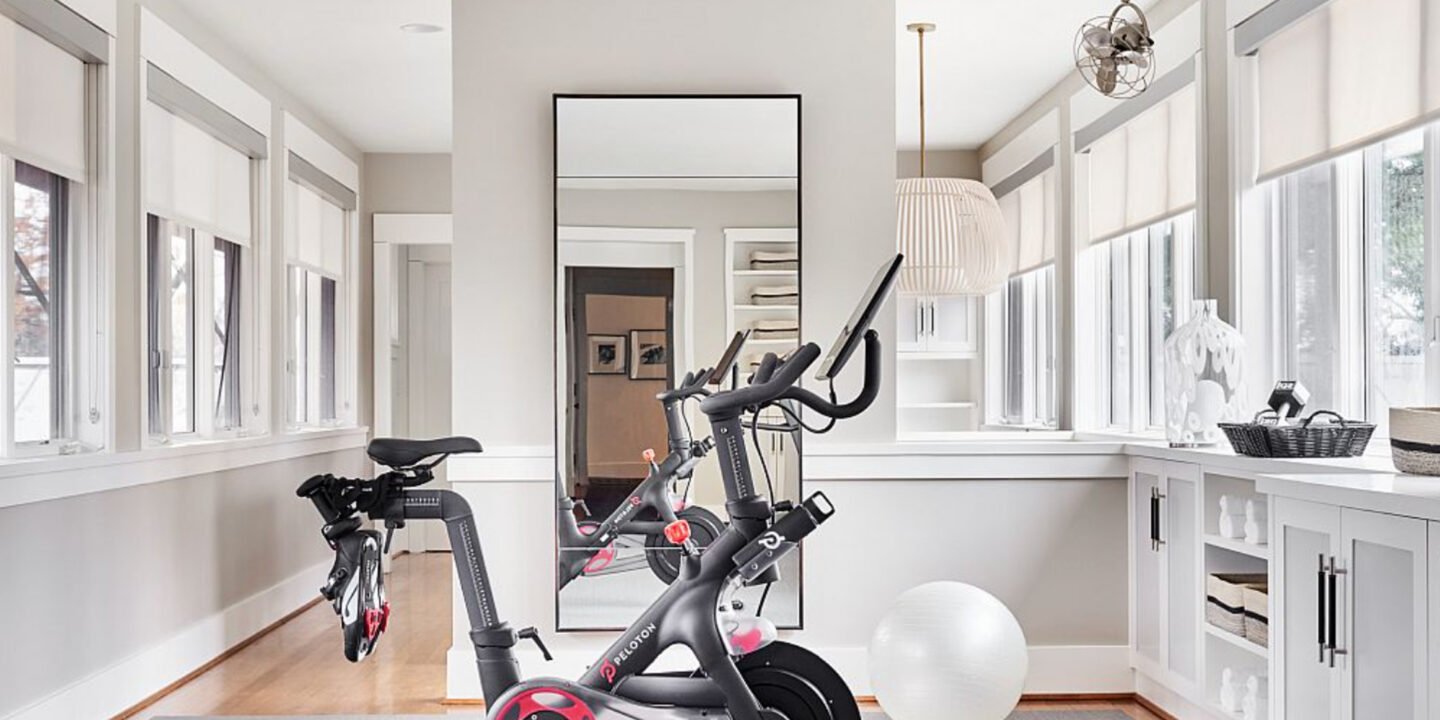
A small home gym machine can make regular workouts much easier when you do not have room for a full-size home gym. The right compact machine can combine several exercises, fit into a bedroom or spare corner, and reduce the need for multiple pieces of equipment.
The challenge is choosing equipment that is genuinely useful rather than simply small. In this guide, you will learn which types of compact machines are worth considering, what features matter most, how to measure your space, and how to build a practical workout setup without overcrowding your home.
What Is a Small Home Gym Machine?
A small home gym machine is fitness equipment designed to provide resistance training, cardio, or both while taking up relatively little floor space.
Unlike a large multi-station home gym, compact equipment is usually designed around one main movement or several exercises with adjustable settings.
Common examples include:
- Compact cable machines
- Folding exercise bikes
- Rowing machines
- Adjustable resistance machines
- Mini ellipticals
- Compact functional trainers
- Portable resistance systems
- Folding treadmills
The best choice depends on your goals, available floor space, ceiling height, storage options, and budget.
Best Small Home Gym Machine Options
There is no single machine that is best for everyone. Different designs solve different problems.
| Machine Type | Best For | Space Requirement | Main Advantage |
|---|---|---|---|
| Compact cable machine | Full-body strength | Low–Medium | Many exercise options |
| Folding exercise bike | Cardio | Low | Easy to store |
| Rowing machine | Full-body cardio | Medium | Works upper and lower body |
| Adjustable resistance machine | Strength training | Low | Flexible resistance |
| Folding treadmill | Walking or running | Medium | Convenient indoor cardio |
| Mini elliptical | Light cardio | Very Low | Small footprint |
| Portable resistance system | Basic strength work | Very Low | Easy storage |
1. Compact Cable Machine
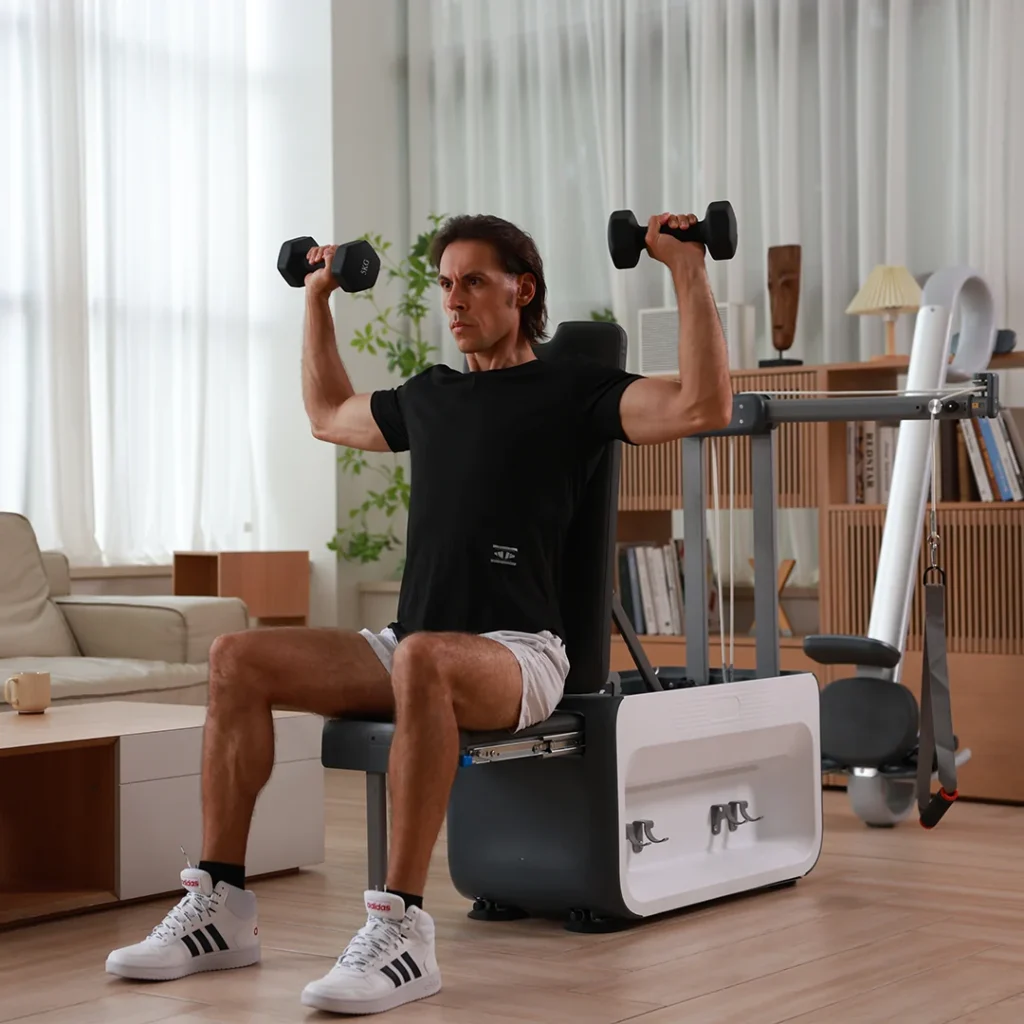
A compact cable machine can be one of the most versatile choices for a small workout area.
Depending on its design, you may be able to perform movements such as:
- Rows
- Presses
- Pulldowns
- Curls
- Triceps exercises
- Squat variations
- Rotational movements
Look for adjustable resistance, a stable frame, and a height that works comfortably in your room.
2. Folding Exercise Bike
If cardio is your priority, a folding exercise bike can be a practical option.
It generally takes less floor space than many traditional cardio machines and can often be moved into storage after a workout.
Before buying one, check:
- Folded dimensions
- Fully assembled dimensions
- Maximum user weight
- Seat adjustment range
- Resistance settings
- Stability during use
3. Compact Rowing Machine
A rowing machine provides both cardiovascular exercise and resistance against a pulling movement. It can be useful when you want one machine that involves several major muscle groups.
The main drawback is length. Even a compact rower can require significant floor space when fully extended, so measure the area rather than relying on product photos.
4. Adjustable Resistance Machine
Adjustable resistance equipment is particularly useful when storage space is limited.
Instead of keeping several weights or machines around the room, one compact system can provide different resistance levels.
This makes it a good option for beginners who want a simple setup that can develop with their training.
5. Folding Treadmill
A folding treadmill can work well if walking or running is the main goal.
However, folding does not mean the machine requires no storage space. You still need enough room to use it safely, plus appropriate clearance around the equipment.
How to Choose the Best Small Home Gym Machine
Before purchasing anything, focus on function rather than appearance.
Measure Your Available Space
Measure:
- Floor length
- Floor width
- Ceiling height
- Storage area
- Doorway width
- Space needed to move around the machine
Also measure the equipment when it is fully open and ready to use, not only when folded.
A machine that fits into a corner may still be impractical if you cannot safely use it.
Match the Machine to Your Goal
Ask yourself what you actually want from your home gym.
For strength: Choose a compact cable or resistance machine.
For cardio: Consider a folding bike, treadmill, rower, or elliptical.
For full-body workouts: A cable-based or adjustable resistance system may provide more exercise variety.
For occasional workouts: A simpler, easily stored option may make more sense than a large machine.
Features That Matter Most
When comparing a small home gym machine, prioritize these features.
Adjustable Resistance
Adjustability allows you to change the challenge as your ability develops. It also makes equipment more useful for different exercises.
Stability
A compact machine should not feel unstable during normal movement. A small footprint should not come at the expense of a secure base.
Adjustability
Look for adjustable seats, handles, pulleys, or other contact points when applicable. Proper positioning can make an exercise more comfortable and controlled.
Storage
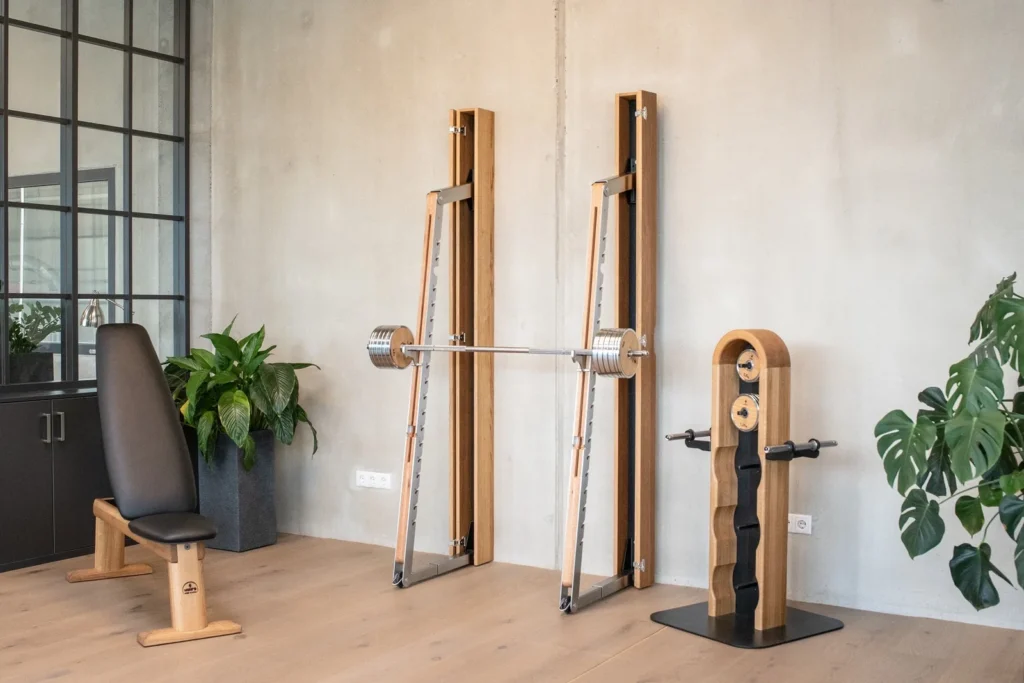
Folding components, wheels, or a compact vertical design can make a major difference in a small home.
Build Quality
Check the frame, moving parts, adjustment mechanisms, and manufacturer’s specifications. Avoid choosing equipment solely because it has the lowest price.
Safety Features
Depending on the machine, useful features may include secure locking mechanisms, stable feet, emergency stops, protective covers, and clear adjustment instructions.
Small Home Gym Machine vs. Free Weights
A machine is not automatically better than free weights or bodyweight exercise.
The American College of Sports Medicine’s 2026 resistance-training guidance emphasizes that consistency matters more than having a complicated program, and resistance training can be effective with machines, free weights, bands, or bodyweight exercises.
| Option | Space | Exercise Variety | Convenience |
| Compact machine | Low–Medium | Medium–High | High |
| Dumbbells | Low–Medium | High | High |
| Resistance bands | Very Low | High | Very High |
| Bodyweight training | Very Low | Medium–High | Very High |
| Large multi-gym | High | Very High | Medium |
For a small home, the smartest setup may combine one compact machine with simple equipment rather than trying to recreate a commercial gym.
How Much Exercise Do You Need?
For adults, U.S. physical activity guidelines recommend 150–300 minutes of moderate-intensity aerobic activity per week, or 75–150 minutes of vigorous activity, along with muscle-strengthening activity on at least two days each week.
That does not mean you need an expensive machine to be active.
A useful home setup should make it easier to exercise consistently. If a machine is complicated, uncomfortable, or difficult to access, you may be less likely to use it.
Common Mistakes to Avoid
Buying Before Measuring
Always measure the machine’s operating footprint. A folded dimension can be misleading.
Choosing Too Many Functions
More exercises do not always mean better equipment. Prioritize movements you will actually perform.
Ignoring Noise
If you live above another household or share walls, noise and vibration can matter. Check the machine’s design and consider appropriate flooring.
Forgetting Storage
A machine that permanently occupies your only open floor area may become inconvenient.
Focusing Only on Price
A cheap machine is not necessarily a good value if it feels unstable or does not suit your training needs.
Skipping the Instructions
Read the manufacturer’s setup, adjustment, and safety instructions before using unfamiliar equipment.
Pro Tips for a Small Home Gym
Use these strategies to get more from limited space:
- Choose equipment that supports multiple exercises.
- Keep frequently used equipment easy to reach.
- Use vertical storage where practical.
- Leave clear walking space around machines.
- Use a suitable exercise mat when appropriate.
- Keep resistance levels manageable and progress gradually.
- Prioritize proper technique over heavier resistance.
- Keep your workout area clean and uncluttered.
For teenagers, exercise should focus on age-appropriate movement, good technique, and safety rather than lifting as much as possible. A qualified coach, trainer, or knowledgeable adult can help with equipment setup and technique.
8 FAQs About Small Home Gym Machines
1. What is the best small home gym machine?
The best option depends on your goal. A compact cable or adjustable resistance machine can provide several strength exercises, while a folding bike or treadmill may be more suitable for cardio.
2. What exercise machine takes up the least space?
Compact resistance systems, mini ellipticals, and some folding bikes can have relatively small footprints. Always compare both their stored and operating dimensions.
3. Is a small home gym machine worth it?
It can be worthwhile if it makes exercise convenient and you use it consistently. Equipment should solve a real problem, such as limited space or the need for convenient resistance training.
4. Can one machine provide a full-body workout?
Some cable and adjustable resistance machines can support exercises for the upper body, lower body, and core. The available movements depend on the specific design.
5. Is a rowing machine good for a small home gym?
A rowing machine can provide an efficient full-body workout, but its length can make storage difficult. Measure the available floor area before purchasing one.
6. Are compact home gym machines good for beginners?
They can be, especially when the machine has simple adjustments and clear instructions. Beginners should start with manageable resistance and learn proper technique before progressing.
7. How much space does a home gym machine need?
The required space varies widely. Measure the machine’s full operating dimensions and allow enough room to get on, get off, move safely, and make adjustments.
8. Do I need a machine to get stronger?
No. Resistance bands, free weights, bodyweight exercises, and other forms of resistance training can also be effective. Current ACSM guidance emphasizes consistency and individualization rather than requiring a particular equipment type.
9. What should I look for in a compact gym machine?
Look for stability, appropriate resistance, useful adjustments, durable construction, suitable dimensions, and safety features. Choose features based on your actual workout goals.
10. Can a small home gym replace a commercial gym?
For many general fitness goals, a well-planned home setup can provide plenty of exercise options. However, a commercial gym may offer more equipment and heavier resistance for people with advanced training needs.
Internal Linking Opportunities
For a Retool Master content cluster, consider linking to:
- small gym equipment — when discussing space-saving equipment.
- home workout ideas — when explaining how to build a routine.
- how to organize a small home gym — when covering storage.
- resistance training for beginners — when discussing adjustable machines.
- home fitness room ideas — when explaining layout and room planning.
Authoritative External Sources
These sources can strengthen the article with trustworthy exercise guidance:
- American College of Sports Medicine — 2026 Resistance Training Guidelines
- CDC — Physical Activity Guidelines for Americans
- U.S. Department of Health and Human Services — Physical Activity Guidance
Conclusion
Choosing a small home gym machine is less about finding the smallest piece of equipment and more about finding one that fits your space, goals, and routine. Measure the area first, decide whether strength or cardio matters most, and prioritize stability, adjustability, storage, and safety.
You do not need a room full of equipment to create a useful workout space. A carefully selected small home gym machine, combined with simple resistance or bodyweight exercises, can create a practical setup that is easier to use consistently.
Your Next Step
At Retool Master, the goal is to make smarter choices about equipment, space, and everyday fitness. Before buying, measure your available area, define your main training goal, and compare machines based on how well they fit your real routine—not just how impressive they look online.












No Comments