



Few internet mysteries have captured people’s imagination quite like staircases in the woods. The idea is simple but unsettling: hikers, hunters, or search-and-rescue teams stumble upon perfectly ordinary staircases standing alone in the middle of a forest, with no house or building anywhere nearby.
Over the years, these stories have spread across forums, social media, podcasts, and YouTube channels. Some people believe the staircases are evidence of paranormal activity. Others think they are simply abandoned parts of old buildings that nature has reclaimed.
So what’s actually known? The answer is far less supernatural than many viral posts suggest—but no less interesting.
This guide explores where the legend came from, why these staircases may exist, the most popular theories, and how to stay safe if you ever encounter one while hiking.
What Are Staircases in the Woods?
The phrase “staircases in the woods“ refers to isolated staircases reportedly found deep inside forests without any visible structure attached to them.
Descriptions usually include:
- Concrete or stone staircases
- Wooden steps partially covered by moss
- Staircases standing in remote forests
- Old foundations with the surrounding building long gone
- Stairs appearing strangely intact despite decades of exposure
While photographs of abandoned staircases certainly exist, many dramatic online stories are based on personal accounts rather than independently verified events.
Where Did the Story Begin?
The modern legend gained popularity through internet forums where anonymous users claimed to have worked in search and rescue.
These stories often followed a similar pattern:
- Teams found unexplained staircases during searches.
- Experienced workers supposedly warned newcomers never to climb them.
- Strange disappearances or unexplained events were linked to the stairs.
Because the original posts were anonymous and lacked evidence, they quickly evolved into modern folklore rather than documented fact.
As the stories spread, creators on YouTube, Reddit, and horror podcasts added new details, making the legend even more mysterious.
Why Do Staircases Sometimes Exist in Forests?
In many cases, there are completely reasonable explanations.
Old Homesteads
Many forests were once farmland or residential communities.
When buildings collapsed or were demolished, stone or concrete staircases sometimes remained because they were stronger than the wooden structures around them.
Over decades, vegetation hid the rest of the foundation while the stairs remained visible.
Fire Damage
Wildfires can destroy homes while leaving concrete foundations and staircases behind.
Although the surrounding building disappears, the staircase may remain standing for years.
Logging Camps
Temporary logging communities often included cabins and support buildings.
After these camps were abandoned, nature gradually reclaimed the area, leaving behind durable construction materials.
Historic Resorts or Lodges
Some forests once contained hotels, hunting lodges, or recreational cabins.
Economic decline, natural disasters, or changing land use eventually led to their abandonment.
A surviving staircase may be one of the few visible reminders of these forgotten places.
Why the Mystery Became So Popular
The idea works because it combines several psychological triggers.
Familiar Objects in Unfamiliar Places
A staircase belongs inside a building.
Finding one in the middle of a forest creates an immediate feeling that something is wrong, even when there’s a logical explanation.
Fear of the Unknown
Forests naturally limit visibility and reduce familiar sounds.
People become more alert in isolated environments, making unusual discoveries feel even stranger.
Storytelling
Internet horror communities often build on existing myths.
One fictional account inspires another until the original source becomes difficult to separate from later embellishments.
The staircase legend grew exactly this way.
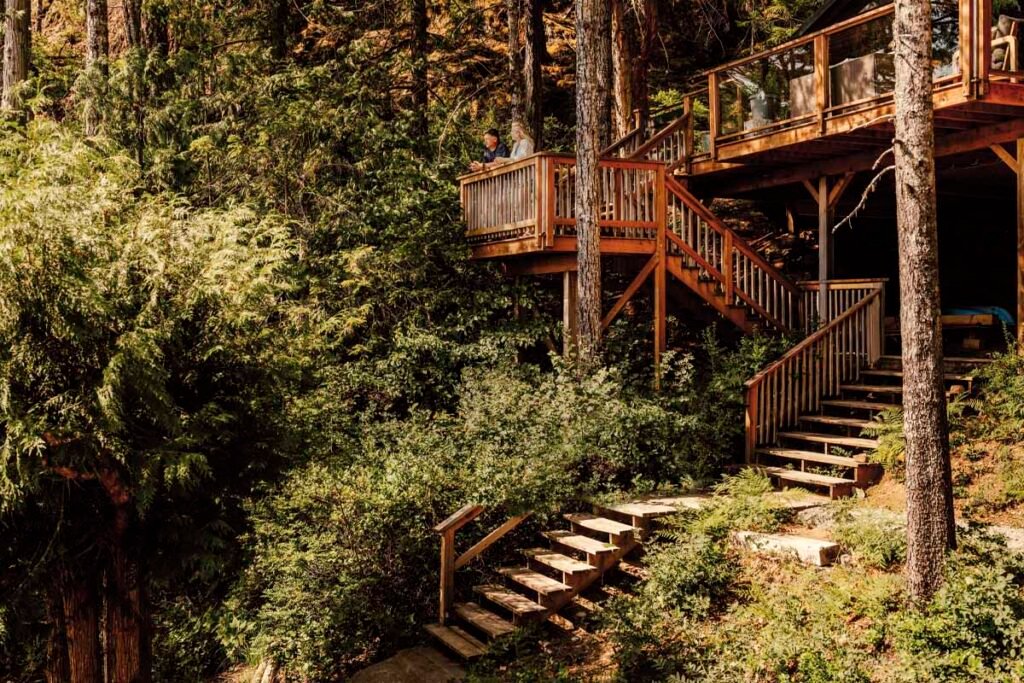
Popular Theories About Staircases in the Woods
1. Remains of Forgotten Buildings
This is the explanation supported by historians, archaeologists, and land managers.
Communities change over time, but durable construction materials often survive much longer than wooden buildings.
2. Abandoned Construction Projects
Occasionally, projects are started but never completed.
A staircase may remain after work stopped decades earlier.
3. Movie Sets
Some isolated staircases are leftovers from film productions or photography locations.
Without maintenance, they slowly become overgrown.
4. Paranormal Theories
Some people believe the stairs are linked to supernatural events, alternate dimensions, or unexplained disappearances.
While these ideas make compelling horror stories, there is no reliable evidence supporting such claims.
Should You Climb a Staircase in the Woods?
From a safety standpoint, it’s usually better not to.
Not because of paranormal concerns, but because abandoned structures can be dangerous.
Potential hazards include:
- Loose concrete
- Rotten wooden steps
- Hidden nails
- Unstable foundations
- Nearby wells or cellars concealed by vegetation
Even experienced hikers avoid exploring unstable ruins unless they are part of a documented historical site.
Common Misconceptions
“Search-and-rescue teams regularly find mysterious staircases.”
There is no publicly verified evidence showing that isolated staircases are a common occurrence during rescue operations.
“Every staircase has a paranormal explanation.”
Most documented examples can be connected to former homes, cabins, farms, or abandoned buildings.
“There are thousands hidden across forests.”
While abandoned structures certainly exist, viral posts often exaggerate how common they are.
Expert Tips for Exploring Forests Safely
Whether you’re hiking, camping, or photographing abandoned places, a few habits make every trip safer.
Stay on Marked Trails
Leaving established paths increases the risk of getting lost or injured.
Respect Private Property
Some abandoned structures remain on privately owned land.
Always check local regulations before exploring.
Avoid Unstable Structures
Old stairs, walls, and foundations may look solid but can collapse without warning.
Carry Navigation Tools
A map, compass, or GPS device can help if phone service disappears.
Tell Someone Your Plans
Share your hiking route and expected return time with a trusted person before entering remote areas.
Why People Continue to Believe the Legend
Urban legends thrive because they blend ordinary places with extraordinary possibilities.
A staircase is an everyday object, yet finding one alone in the wilderness feels unsettling enough to invite speculation.
Social media amplifies these stories, allowing photographs, personal experiences, fictional tales, and genuine historical discoveries to become mixed together. Over time, separating fact from fiction becomes increasingly difficult.
That doesn’t make the stories meaningless. They reflect our fascination with forgotten places, abandoned history, and the mysteries that nature seems to hide.
Final Thoughts on Staircases in the Woods
The mystery of staircases in the woods continues to inspire horror stories, documentaries, and online discussions because it sits somewhere between history and folklore.
In many documented cases, these isolated staircases are simply the remains of homes, cabins, lodges, or settlements that disappeared long ago while their strongest structures survived. Although supernatural explanations remain popular in fiction and internet culture, there is no credible evidence that these staircases possess unusual powers or are connected to unexplained phenomena.
If you ever discover one during a hike, appreciate it as an intriguing piece of local history—but keep your distance if the structure appears unsafe. Sometimes the real story behind an abandoned staircase is just as fascinating as the myths surrounding it.

5. Frequently Asked Questions
1. What are staircases in the woods?
They are isolated staircases found in forests, often believed to be remnants of old buildings or abandoned structures. Many online stories add fictional or paranormal elements.
2. Are staircases in the woods real?
Yes. Real abandoned staircases exist, but they usually have historical or architectural explanations rather than supernatural ones.
3. Why do people say you shouldn’t climb them?
The warning is primarily about physical safety. Old staircases can be unstable, damaged, or surrounded by hidden hazards.
4. Did search-and-rescue teams start the legend?
Many versions of the story claim that search-and-rescue workers encountered mysterious staircases, but these accounts have not been independently verified.
5. Are staircases in the woods connected to paranormal activity?
There is no credible evidence supporting paranormal claims. Most documented examples can be explained by abandoned homes, cabins, or other former structures.
6. Can I visit abandoned staircases?
If the location is on public land and access is permitted, you may be able to view them. Avoid climbing or damaging historical remains, and always follow local regulations.
7. Why are these stories so popular online?
They combine abandoned places, mystery, folklore, and horror storytelling, making them highly engaging for readers and viewers.














No Comments